Showing posts with label High School. Show all posts

Friday, February 3, 2023

🚨New Content:🚨 Fate of the Plates

Look, we get it, teaching plate tectonics is hard. Your students have to mentally visualize a process that occurs below the Earth's surface and we only have indirect evidence to support how it works. You've tried everything...graham crackers and whipped cream, play dough, online videos, and more. We've done all those things too! 

Revolutionize the way you teach plate tectonics with Infiniscope's new digital lesson titled "Fate of the Plates," created for high school and higher ed students.

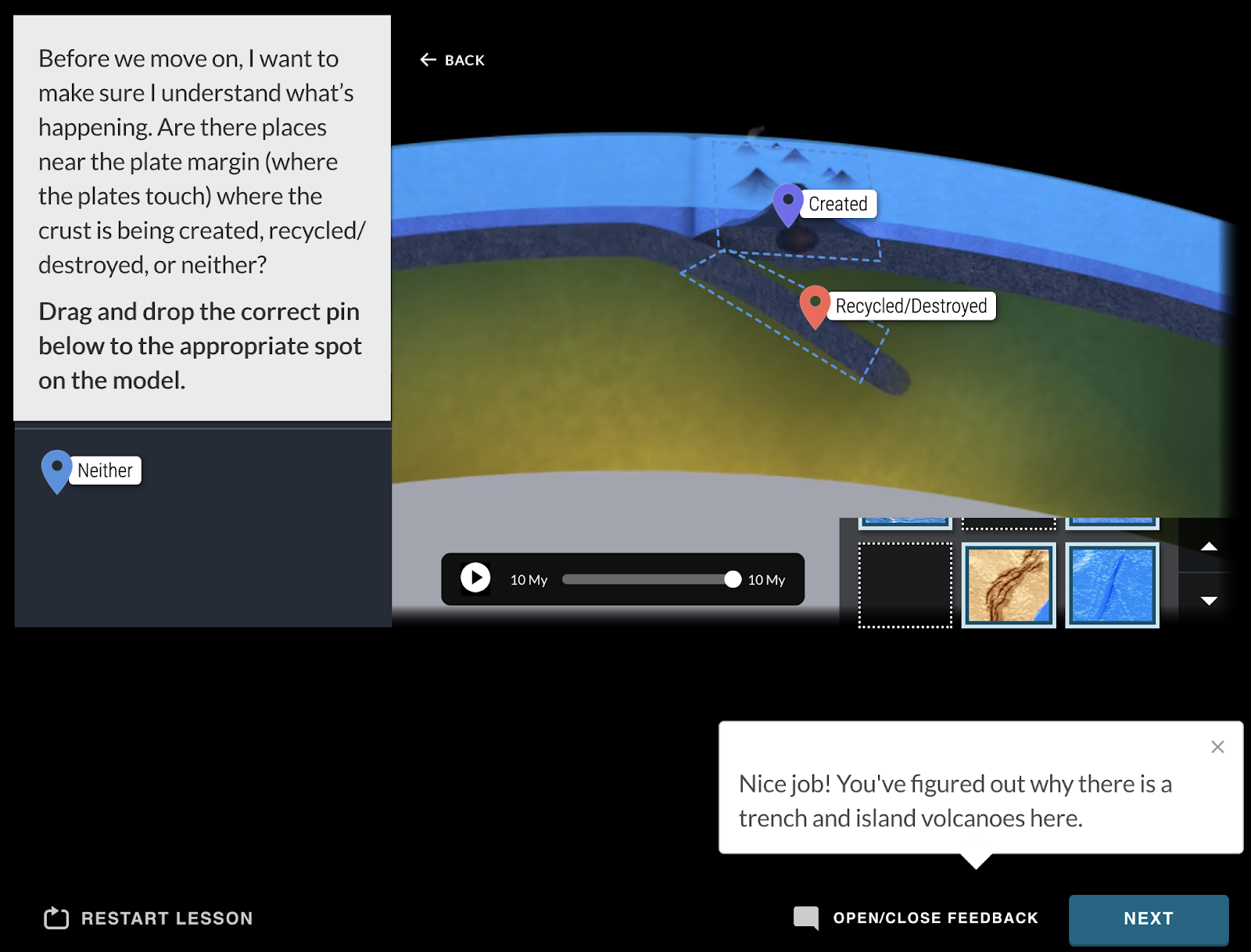
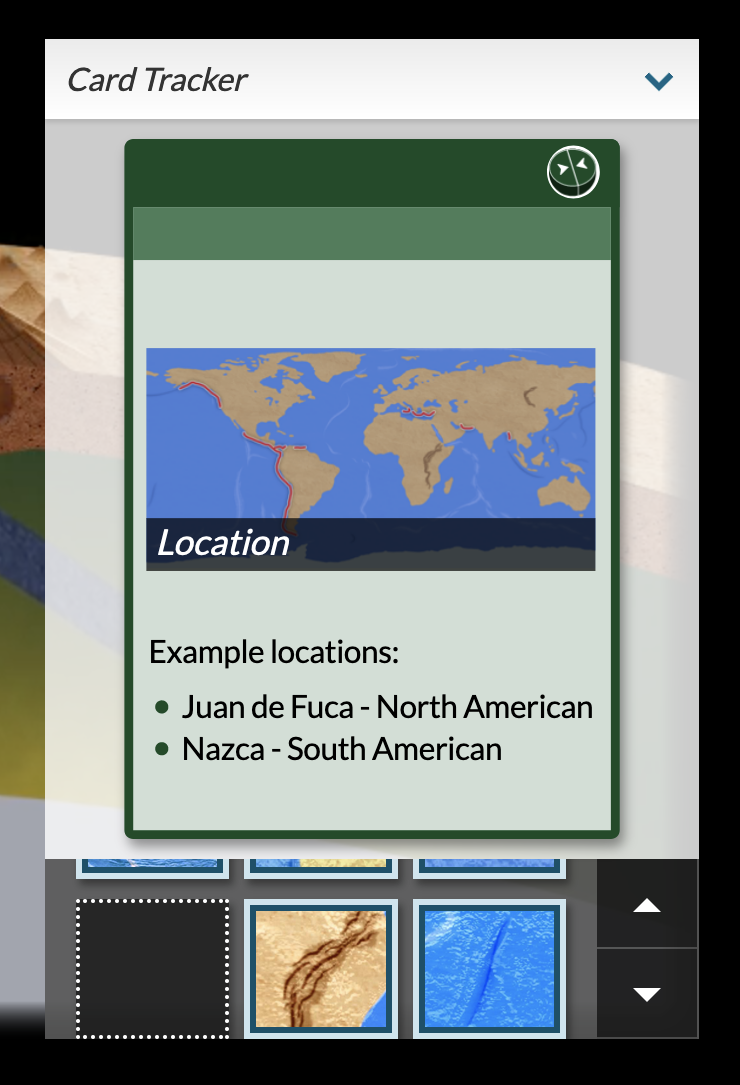
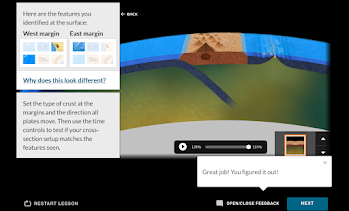
Fate of the Plates features a simulation that allows students to explore below the crust of Earth, choose from continental or oceanic crust, choose their direction of movement, and observe the features formed resulting in different plate boundaries. Along the way, the students collect cards that show the crustal features created at these boundaries and allows the student to track their progress toward completion of the lesson. This hands-on approach makes learning about plate tectonics more accessible by eliminating the mental model gymnastics and enables direct exploration of the variables involved.

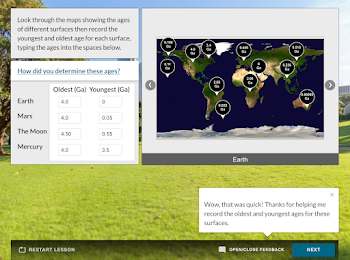
The lesson also features a narrative-driven exploration where students work to help their AI friend, named Orby, answer the question of why the Earth's crust is younger than the crust of other terrestrial planets. Along the way, Orby provides feedback, creating an interactive and personalized experience.


Want to know our absolute favorite part? When we taught this topic in the classroom, it was difficult to find simulations that show more than 2 plates interacting, so, we made a section on 3 plate interactions! It's based on the S. American plate and it's 🔥FIRE🔥 ...errr ...molten? 


Finally, the product is designed to be easy for teachers to use, with full lesson plans and three different classroom delivery models, launch, enroll via LMS, or enroll without an LMS. If you're looking to take your plate tectonics lessons to the next level, this new digital product is an excellent choice. With its engaging narrative, AI friend, simulation, and tracking features, your students will be eager to learn more.


🔥HOT TIP🔥

Plate Tectonics not part of your curriculum? No worries! Got testing days coming up in the spring? Spring break? Sub days? These lessons are a great way to provide high quality content without the muss and fuss of a full on lesson plan and still slap (that's what the kids say, right) when you just need to fill time. You can share the lesson with students directly, enroll them in our LMS-lite version, or deploy it via Canvas, Blackboard, or Moodle.

Tuesday, January 24, 2023

🚨New Content:🚨 Solar System Formation

Diagram depicting the formation of a solar system starting with gases, moving to coalescing and rotation. The process of solar system formation...a topic we as teachers often teach using a diagram similar to the one on the left. We get the chance to talk about hot plasma (not giant balls of gas burning millions of miles away Pumba! 🐗), primordial planets, coalescence of gas and dust, the process of nuclear fusion....we could go on and on! One thing for sure, this is a topic that combines a ton of the physical sciences your students have learned in the past and transcends grade levels. We've seen this topic in middle school, high school, and college courses. 

What if I told you (insert Morpheus gif here 🔴 🔵) that you could go beyond the diagram and have your students derive condensation temperatures and location of planets in our solar system and extrasolar planets using an interactive data collecting probe and graphing technique?  

What if I also told you this experience was imagined and directed by ASU's Dr. Molly Simon, an assistant professor interested in the learning differences between students that engage in digital explorations vs those using traditional pencil and paper methods? 

Now that we have your attention, some extra details on why YOU might want to keep this lab in your back pocket! 📌
  1. Learners are presented with a test object (1) that they then drop into the solar system (2) and is plotted on the graph (3). (Figure 1) Here they learn how to use the simulation and read the graph. 

    Figure 1: Explore - Test object drops in solar system to graph temperature and distance from the Sun


  2. Learners choose the type of materials they wish to investigate. (Figure 2)
    Figure 2: Choose and Explore your materials

  3. Figure 3: Predict materials

    Learners then investigate where these materials will condense in the solar system using them as test objects and plotting them on the graph.


  4. From here, learners are tasked to predict the type of condensed materials that are present at each planet location (by AU) in our solar system (Figure 3), then test that prediction by placing the planets in their correct location in the solar system (Figure 4).


    Figure 4: Prediction testing


  5. Figure 5: Explain
    Learners are now asked to explain what they have learned about the condensation temperatures as a predictor of the early solar system (Figure 5).


  6. Finally learners are asked to elaborate and apply what they've learned to an exoplanetary system (Figure 6). 

Figure 6: Elaborate

🔥HOT TIP🔥


Solar system formation not part of your curriculum? No worries! Got testing days coming up in the spring? Spring break? Sub days? These lessons are a great way to provide high quality content without the muss and fuss of a full on lesson plan and still slap (that's what the kids say, right) when you just need to fill time. You can share the lesson with students directly, enroll them in our LMS-lite version, or deploy it via Canvas, Blackboard, or Moodle.

Get started today and check out Solar System Formation.